A Rainy-Day Gallery Visit with One Detail to Follow
A rainy-day gallery visit feels easier to shape when you choose one visual detail to follow, giving the afternoon direction without a packed itinerary.
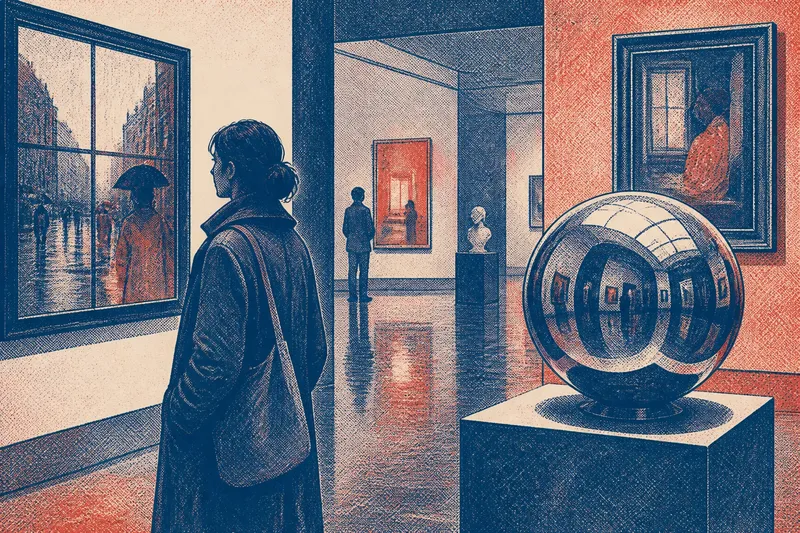
What should you do with a rainy afternoon when you want to get out but do not want to plan a whole day? A rainy-day gallery visit can begin with one visual detail to follow: hands, windows, shadows, folds of fabric, or another feature you can spot across several rooms. That small question gives your attention somewhere to land without turning the museum into a checklist.
The aim is not to see everything or to prove that you looked carefully. It is to let one recurring detail connect works that might otherwise blur together. Rain can make this kind of visit especially appealing: the galleries offer shelter, while wet streets and gray light give you a clear contrast to carry indoors.
How do you choose one detail to follow?
Choose something visible enough to notice in different kinds of work, but specific enough to help you look again. “Color” is broad; “a flash of red” gives your eye a more useful task. “People” could mean almost anything, while “hands at work” narrows the search without dictating what you should conclude.
Try one of these starting points:
- Hands: Notice whether they hold, point, rest, conceal, or make something.
- Windows and openings: Look at what they reveal, frame, or keep out.
- Shadows: Follow where they fall and how they shape a scene.
- Folds: Watch how fabric, paper, or drapery suggests movement and weight.
- Edges: Notice where a figure or object meets the border of the image.
- Reflections: Look for what appears indirectly in glass, water, or polished surfaces.
Pick a detail you already find a little interesting, not one that sounds impressive. You can change your mind once you are inside. If you keep noticing something else, follow that instead; the point is to give the visit direction, not to obey an arbitrary rule.
Which galleries work well for a rainy afternoon?
A gallery with several kinds of work can make it easier to carry one detail from room to room. A museum with painting, sculpture, decorative objects, or photography may offer more chances to see how the same feature changes across materials. A smaller gallery can be just as satisfying if its rooms invite a slower look and you do not feel pressed to cover the entire collection.
Before leaving, check practical information on the venue’s own website: opening hours, admission arrangements, coat or bag policies, accessibility, and any temporary closures. If you are choosing between several places, consider the journey in the rain as well as the displays. A short walk from a transit stop or a sheltered entrance may matter more than the size of the collection on a wet day.
Do not choose a venue solely because it is famous or large. For this kind of outing, a place where you can pause comfortably may suit you better than one whose scale encourages you to hurry. A nearby gallery with a manageable route can be a complete destination in itself.
How can you look without turning the visit into homework?
Start in the first room by looking at a work as you normally would. Then bring your chosen detail into view and ask a plain question: what is it doing here? The answer can be uncertain. You might notice that a shadow hides something, or that a figure’s hands draw your attention away from the face.
Let each work answer in its own way. In one painting, a window may open onto a landscape; in another, it may act like a boundary. A sculpture may have no painted shadow at all, yet its form can still make you think about light and obstruction. The detail is a thread, not a claim that every work means the same thing.
There is no need to take notes unless you enjoy doing so. If you want a small record, jot down a few words on your phone between rooms rather than composing a review in front of each work. It can be enough to remember one surprising variation and one question you want to keep thinking about.
What should you bring and how long should you stay?
Bring only what helps you stay comfortable: a light rain layer, a bag that is easy to carry, and any essentials you would normally take on a city outing. A compact umbrella can be convenient outdoors, but you may need to leave it in a designated place inside. Venue rules differ, so check the gallery’s instructions for umbrellas, wet coats, food, photography, and bags before you go.
There is no ideal length for the visit. You might spend a brief spell with a handful of works, or stay longer if the rooms hold your attention. Let your focus decide when you are ready to leave: when the detail has started to feel repetitive, when your attention is tired, or when you have reached a natural pause, the outing has done its work.
What is not worth the effort is racing through every room just to say you saw the whole collection. Nor do you need a notebook, a special art vocabulary, or a carefully researched theme. Those additions can be enjoyable for some visitors, but they are optional, not entry requirements.
What if the gallery is busy or the detail is hard to find?
If a room is crowded, step aside where visitors can pass and return to a work when there is space. You can also let the detail travel with you to the next room rather than waiting for a perfect view. Looking from a comfortable distance is often more useful than edging close while people move around you.
If your chosen feature does not appear in the first few rooms, loosen the wording. “Hands at work” can broaden to “hands and gestures”; “a flash of red” can become “a strong accent of color.” If the trail still goes quiet, choose another detail you have begun noticing. A good focus should support attention, not make the visit feel like a failed search.
Imagine you arrive at a neighborhood museum on a rainy afternoon and choose reflections as your detail. You notice a dim shape in a painted window, then a brighter reflection on a polished object in another room; instead of searching every gallery for more examples, you pause over those two differences and leave with a clear impression of how each artist used reflected light.
How do you turn the visit into a pleasant rainy-day outing?
Keep the plan simple around the gallery itself. You might have a warm drink before entering, take a sheltered route, or stop somewhere nearby afterward if the rain has eased. Those are options, not additional assignments; the visit does not need to grow into a full itinerary to feel complete.
It can help to leave a little unclaimed time on either side. If the weather shifts, you can decide whether to linger indoors or head home without having to rearrange a chain of reservations. The chosen detail gives the gallery portion its shape, while the rest of the afternoon remains open.
How can you make the visit accessible and comfortable?
Check the venue’s access information before setting out, especially if you need step-free routes, seating, quieter areas, or guidance on assistance animals. If the information is unclear, contact the gallery directly and ask about the particular route or facility you need. Accessibility can vary from one building and exhibition to another.
Once inside, use benches and quieter rooms as part of the visit rather than treating them as interruptions. You can follow a detail while seated, take a pause, or shorten the route when your energy calls for it. A focused outing should fit your circumstances; it does not need to look the same for every visitor.
What questions help you notice more?
Should you read every wall label?
No. Read a label when a work catches your attention or when a little context would help you understand what you are seeing. You can follow your chosen detail first and return to the label afterward, so its wording does not decide your first impression.
Can you bring children on a one-detail visit?
Yes, if the gallery welcomes children and the focus feels like a game rather than a test. Ask each person to spot a version of the detail, then let them describe what they saw in their own words.
What if you know little about art?
You do not need specialist knowledge to notice where a shadow falls or what a hand is doing. Begin with what you can see, and treat uncertainty as part of looking rather than a reason to stop.
Can you take photographs?
Only where the gallery permits them, and without disrupting other visitors. If photography is not allowed, a short written note or a remembered detail can serve just as well.
A rainy-day gallery visit works best when the focus stays light: one detail, a few attentive pauses, and permission to leave when you have had enough. The next time the weather closes in, choose a visual thread that interests you and let it shape the rooms you happen to enter. That is plenty of direction for an afternoon, and enough freedom to notice something you did not expect.